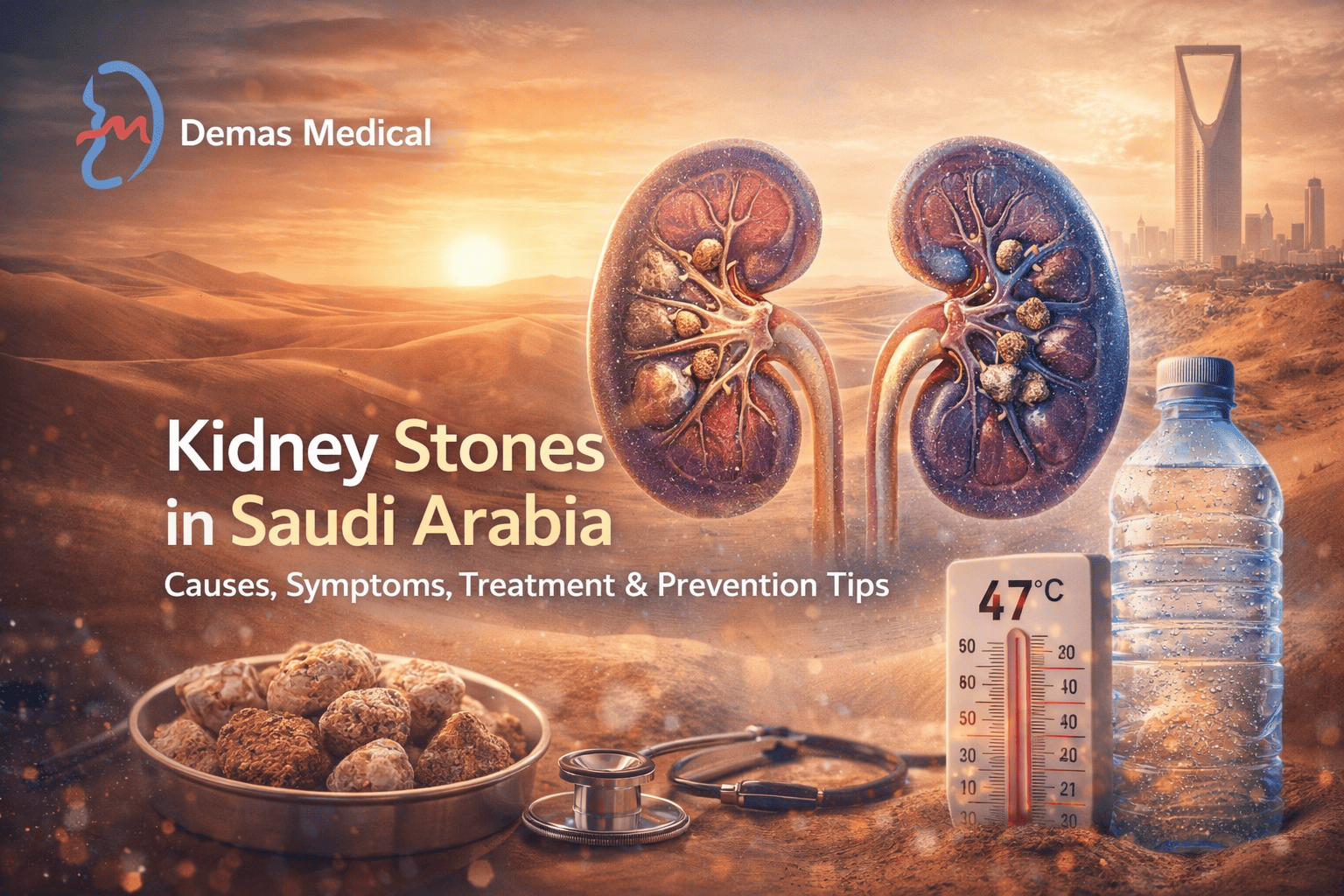
Kidney Stones in Saudi Arabia: Causes, Symptoms, Treatment & Prevention Tips
Kidney stones are a common health problem in Saudi Arabia, especially because of the Kingdom’s hot climate, dehydration risk, and diet habits that may increase stone formation. Many people experience sudden severe pain and end up in emergency care without realizing that early warning signs were already present.
The good news is: kidney stones can often be prevented with the right lifestyle changes, hydration, and medical guidance. In this educational blog by Demas Medical (Riyadh, Saudi Arabia), we explain what kidney stones are, why they’re common in Saudi Arabia, key symptoms, treatment options, and the best prevention tips.
What Are Kidney Stones?
Kidney stones are hard deposits made of minerals and salts that form inside the kidneys. Stones can be small like sand or large enough to block urine flow. When a stone moves into the urinary tract, it can cause intense pain and complications.
The most common types include:
-
Calcium stones (most common)
-
Uric acid stones
-
Struvite stones (infection-related)
-
Cystine stones (rare, genetic)
Why Kidney Stones Are Common in Saudi Arabia
Kidney stones are more frequent in the Gulf region due to specific health and environmental factors.
1) Hot Climate & Dehydration
Saudi Arabia experiences high temperatures for many months, increasing water loss through sweating. When the body is dehydrated:
-
Urine becomes concentrated
-
Minerals crystallize more easily
-
Stone formation risk increases
2) Low Daily Water Intake
Many people unintentionally drink less water due to work routine, travel, or lack of thirst.
3) Dietary Habits
Certain diets can contribute to stones, such as:
-
high salt intake
-
frequent fast food
-
excessive animal protein
-
sugary drinks / soft drinks
4) High Rates of Metabolic Conditions
Health conditions like:
-
obesity
-
diabetes
-
high blood pressure
can increase kidney stone risk as well.
Early Symptoms of Kidney Stones
Symptoms may start mild and become severe. Here are warning signs Saudi citizens should not ignore:
✅ 1) Severe Pain (Flank Pain)
Most common symptom:
-
sharp pain on one side of lower back
-
pain may move to groin/lower abdomen
✅ 2) Burning Urination
You may feel pain or burning while urinating.
✅ 3) Blood in Urine
Urine may appear:
-
pink
-
red
-
brown
✅ 4) Frequent Urge to Urinate
Feeling the urge again and again, even if little urine comes out.
✅ 5) Nausea or Vomiting
Severe pain can trigger nausea.
✅ 6) Fever (Serious Sign)
If kidney stones cause infection, fever/chills can occur.
🚨 This is an emergency and needs immediate medical care.
How Kidney Stones Are Diagnosed
At Demas Medical, kidney stone diagnosis typically includes:
1) Urine Test
Detects blood, infection, or crystals.
2) Blood Test
Checks kidney function and mineral levels.
3) Ultrasound / CT Scan
Confirms stone size, position, and blockage risk.
Early diagnosis helps prevent complications like:
-
infection
-
urine blockage
-
kidney damage
Kidney Stone Treatment Options in Riyadh
Treatment depends on the stone type and size.
1) Home Treatment (Small Stones)
If stone is small, doctors may advise:
-
drinking more water
-
pain relief medicine
-
medication to relax urinary tract and help stone pass
✅ Many stones pass naturally within a few days/weeks under medical supervision.
2) Medical Procedures (Large Stones)
If stones are large or causing blockage, treatment may include:
-
Shock Wave Lithotripsy (SWL)
breaks stones into smaller pieces -
Ureteroscopy
removes/breaks stone with a small scope -
Percutaneous Nephrolithotomy (PCNL)
for very large stones
Demas Medical provides guidance and specialist evaluation to ensure safe treatment.
Best Prevention Tips for Kidney Stones (Saudi Arabia Climate Friendly)
Prevention is the most powerful strategy, especially for people who had stones before.
✅ 1) Drink Enough Water Daily
Goal: keep urine light yellow/clear.
In Saudi climate, hydration is essential.
📌 Tip: Add reminder on phone, carry a bottle, drink water before thirst starts.
✅ 2) Reduce Salt Intake
Too much salt increases calcium in urine (stone risk).
Avoid:
-
chips
-
fast food
-
salty pickles
-
processed food
✅ 3) Limit Soft Drinks & Sugary Beverages
Cola drinks increase stone risk for some people.
✅ 4) Balance Protein Intake
Excess red meat can increase uric acid stones.
✅ 5) Eat More Citrate-Rich Foods
Natural protection against stones:
-
lemons
-
oranges
-
citrus fruits
✅ 6) Don’t Ignore Urinary Infections
Infections can lead to stone formation. Early treatment is necessary.
When to See a Kidney Specialist in Riyadh
You should consult a kidney specialist if:
-
pain is severe and repeated
-
blood appears in urine
-
fever/chills occur
-
urine output reduces
-
stones keep returning
Demas Medical’s experienced kidney specialists support patients with prevention plans, kidney health monitoring, and treatment options.
Conclusion
Kidney stones are common in Saudi Arabia due to dehydration and lifestyle factors, but the condition is manageable. Recognizing symptoms early and making lifestyle adjustments can reduce the chance of recurring stones and protect long-term kidney health.
Demas Medical (Riyadh, Saudi Arabia) is dedicated to kidney wellness—offering expert guidance, diagnosis, and kidney care services in a supportive and professional environment.
If you are experiencing kidney stone symptoms, contact Demas Medical in Riyadh for expert evaluation and personalized kidney care.