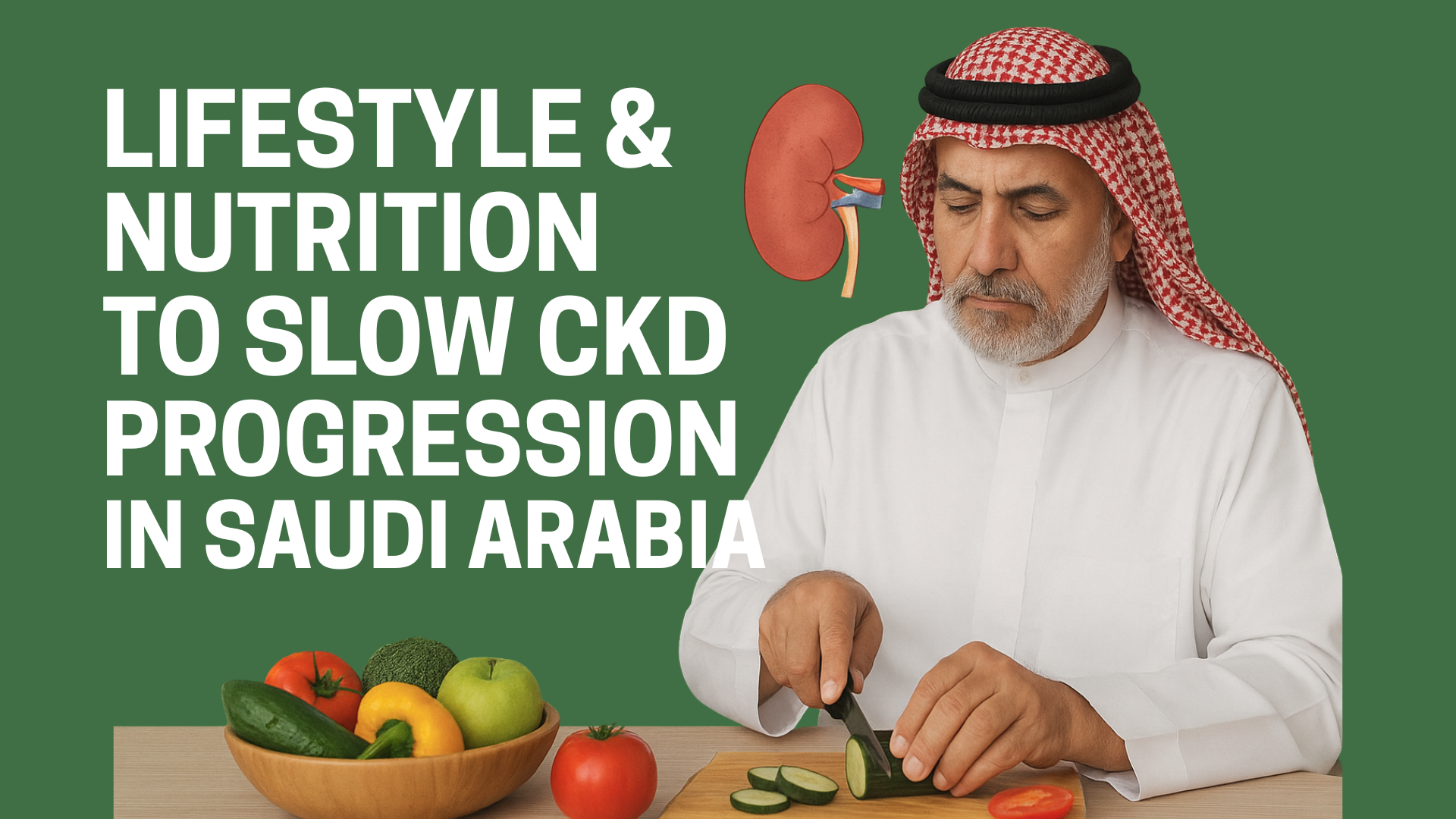
Lifestyle & Nutrition Strategies to Slow Chronic Kidney Disease Progression in Saudi Arabia
Chronic kidney disease (CKD) is a growing health concern in Saudi Arabia, driven by risk factors such as diabetes, hypertension and obesity. Studies show that public knowledge around CKD is still lacking in the Kingdom. While early detection remains critical, equally important is what happens after diagnosis: managing lifestyle and nutrition to help slow progression. In this blog we’ll share evidence-based and culturally-relevant strategies, suitable for patients, caregivers and healthcare professionals in Saudi Arabia.
Understanding CKD progression
CKD refers to the gradual decline in kidney function over months or years. The kidneys filter toxins, manage fluid and electrolyte balance and support other body systems. When kidneys fail to perform these tasks effectively, complications follow. Research indicates that in Saudi Arabia the prevalence of CKD stages 3-5 is significant and rising. Key risk factors include:
-
Diabetes (especially uncontrolled)
-
Hypertension (high blood pressure)
-
Obesity and metabolic syndrome
-
Family history of kidney disease
-
Sedentary lifestyle and poor diet
Slowing CKD progression means reducing further damage to the kidneys, preserving remaining function and delaying or avoiding the need for dialysis or transplant.
Why lifestyle & nutrition matter
Lifestyle and nutrition are modifiable factors — meaning patients can act on them. For example, research in Saudi Arabia found that knowledge and awareness of CKD were significantly better among individuals who had higher education, higher income or were physically active. This suggests that empowering patients with lifestyle interventions can make a meaningful difference. Moreover, many national and regional studies highlight that CKD in the Arab world is under-diagnosed and under-treated partly due to lifestyle patterns.
Nutrition Strategies (Tailored for Saudi Arabia)
-
Adopt a kidney-friendly diet
-
Limit sodium (salt): High salt intake increases blood pressure and fluid retention — both harmful to the kidneys.
-
Control protein intake: While protein is essential, excessive protein can stress the kidneys. Work with a dietician to determine ideal amount (often 0.8 g/kg/day in CKD stage 3-4, though this varies).
-
Choose healthy fats and avoid processed foods: Opt for olive oil, nuts (in moderation), and avoid deep-fried foods.
-
Manage potassium & phosphorus: In later stages of CKD, high levels of potassium (bananas, oranges, potatoes) and phosphorus (dairy, cola drinks) can be dangerous. Monitoring is key.
-
Stay hydrated, but in some advanced CKD fluid restriction may apply — always follow your specialist’s advice.
-
-
Incorporate traditional Saudi foods wisely
-
Traditional diets rich in legumes, vegetables and whole grains are beneficial — aim to retain those elements.
-
Use spices and herbs instead of excessive salt.
-
Limit traditional high-sodium items (e.g., preserved foods, some sauces) and camel-milk-based dairy that may require monitoring for phosphorus/potassium depending on kidney stage.
-
Opt for healthier snacks: roasted nuts instead of salted chips; fresh fruits (but check potassium) instead of high-salt sweets.
-
-
Maintain a healthy weight
-
Obesity is a known CKD risk factor and accelerates progression. Aim for a Body Mass Index (BMI) within healthy range.
-
Even modest weight loss (5-10%) can improve blood pressure, glucose control and kidney stress.
-
-
Regular physical activity
-
At least 150 minutes/week of moderate aerobic activity (walking, cycling) plus strength exercises.
-
Physical activity improves cardiovascular health, weight control and insulin sensitivity — all beneficial for kidneys.
-
Even with CKD you can often exercise — check with your nephrologist.
-
Lifestyle Habits & Behavior Change
-
Control blood pressure and blood sugar: These are the two biggest modifiable risk factors for CKD progression.
-
Avoid non-steroidal anti-inflammatory drugs (NSAIDs) unless advised — frequent NSAID use can damage kidneys.
-
Quit smoking: Smoking accelerates kidney damage and increases cardiovascular risk.
-
Limit alcohol: If you consume, do so per guidance; alcohol can further strain kidneys.
-
Get regular screening: If you have diabetes, hypertension or other risk factors, get your eGFR, albumin-creatinine ratio (ACR) and kidney ultrasound as recommended. Early detection of worsening helps guide lifestyle tweaks.
-
Engage your support system: Family, friends and caregivers in Saudi Arabia play a vital role. Encourage involvement of the household in healthier cooking, shared activity and monitoring.
Working with Your Kidney Specialist at Demas Medical
At Demas Medical, our kidney specialists and dietitians understand both the clinical and cultural context of Saudi Arabia. We provide:
-
Tailored nutrition plans based on your CKD stage, comorbidities (diabetes, hypertension) and lifestyle.
-
Lifestyle-modification counselling specific to Saudi culture, diet and environment.
-
Regular monitoring: eGFR, ACR, blood pressure trends, weight/BMI, diet adherence.
-
Personalized care plans: For example, adjusting dietary potassium/phosphorus depending on lab results and food availability in Saudi markets.
-
Education sessions: Empowering patients and families with knowledge — a key gap as research shows many Saudis with CKD risk factors are unaware of the disease and its implications.
Takeaway & Next Steps
If you or a loved one is living with CKD in Saudi Arabia, remember: early detection is only half the battle. What follows — your daily lifestyle and nutrition choices — matter hugely. By adopting kidney-friendly eating, staying active, controlling blood pressure & blood sugar, avoiding harmful habits and working closely with a specialist centre like Demas Medical, you can help slow kidney disease progression and protect your quality of life.
Quick action checklist:
-
Book a consultation with a kidney specialist + dietician.
-
Review your current diet: sodium, protein, potassium, phosphorus.
-
Monitor weight/BMI and aim for healthy range.
-
Set an exercise target (e.g., 30 mins walking 5x/week).
-
Ask your doctor about NSAID use, smoking cessation use.
-
Schedule your next kidney-function labs (eGFR, ACR).
-
Involve your family: cooking, exercise, monitoring together.